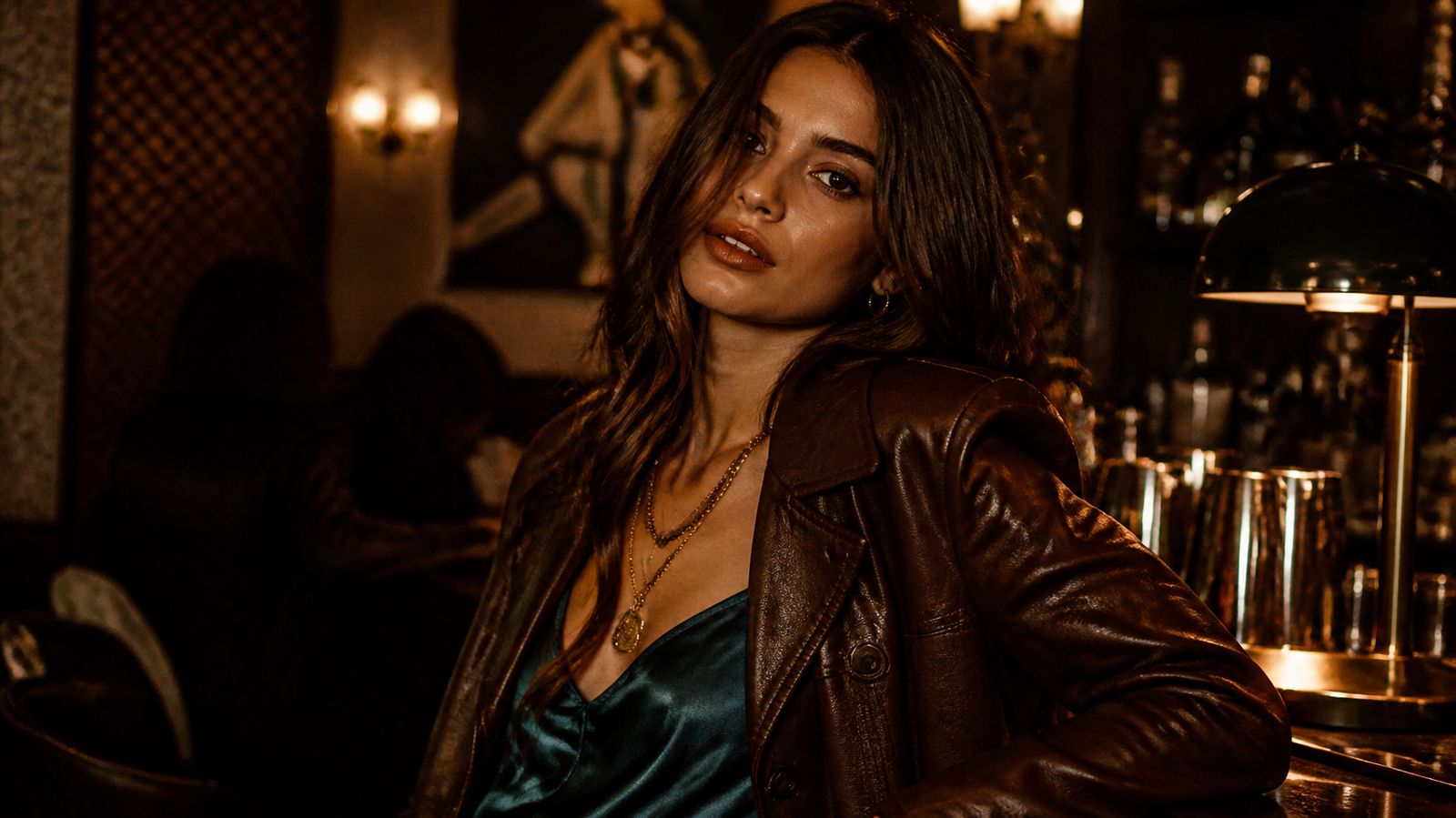
What is a Dark Autumn?
Dark Autumn, also called Deep Autumn, is the deepest of the Autumn subpalettes. Your undertone is warm and golden, and your overall coloring is dark and rich, with enough contrast to carry strong color. Where a Soft Autumn needs dusty, grayed shades, you need depth. Pale or muted colors can make you look tired.
Dark Autumn sits next to Dark Winter on the color wheel. Both are deep, but Dark Autumn leans warm. That shared depth is why some Dark Autumns can wear colors that look almost black.
Common Dark Autumn traits
- Hair: medium-to-deep brown, chestnut, auburn, dark copper or near-black with warmth.
- Eyes: dark brown, deep hazel, warm olive-green or topaz.
- Skin: golden, olive, warm bronze or deep warm brown. It can range from fair to deep.
- The pastel test: baby pink and powder blue look washed out against your coloring.
- The depth test: chocolate, forest and burgundy-brown make your face look clearer and more awake.
The Dark Autumn palette
- Neutrals: chocolate, espresso, dark olive, deep camel, coffee and warm cream.
- Accents: deep teal, pine, mahogany, dark rust, deep gold, burnt orange, tomato red and aubergine.
- Lighter colors: camel, warm cream and golden beige. Use them for layering, ideally with something deeper near your face.
Colors a Dark Autumn should avoid
- Pale pastels: baby pink, mint and powder blue.
- Dusty, grayed tones: mushroom, dove gray and dusty rose. They flatten your depth.
- Cool, icy colors: icy blue, lavender and blue-gray.
- Stark optic white. Choose warm cream or ivory instead.
Dark Autumn clothes
- Anchor your wardrobe in chocolate. It's your deepest neutral, and it's usually kinder to warm skin than black. A chocolate coat or blazer is a strong first piece.
- Add deep jewel-earth accents: pine, deep teal, mahogany and dark rust for knits, blouses and dresses.
- Use rich textures: leather, suede, velvet, cashmere, corduroy and heavy silk all suit the palette's depth.
- Choose bold, warm prints: paisley, tortoiseshell, animal prints in warm browns and deep florals.
- For denim, dark indigo and deep brown or olive washes work well.
Dark Autumn makeup
- Lips: brick, deep terracotta, warm brown-red, cinnamon and berry-brown.
- Cheeks: terracotta, warm bronze and deep apricot.
- Eyes: bronze, copper, olive, plum-brown and deep gold. Dark brown or brown-black liner.
- Brows: warm dark brown, matched to the depth of your hair.
Jewelry, metals and hair color
Metals: yellow gold, antique gold, bronze and copper. Chunky and textured pieces suit the palette's richness. Amber, tiger's eye, garnet and dark tortoiseshell are good matches.
Hair color: rich browns, chestnut, auburn and warm dark copper. Ashy or icy shades usually fight your warmth. As silver comes in, many Dark Autumns keep some warm depth with lowlights. A colorist can tell you what works for your hair.
Dark Autumn vs. Dark Winter
Both palettes are deep and can handle strong color. Undertone separates them. Dark Autumn looks best in warm depth: chocolate, rust and pine with gold. Dark Winter looks best in cool depth: black, deep navy and burgundy with silver. If true black and icy white look sharp on you, and gold looks brassy, lean Dark Winter.
Dark Autumn vs. True Autumn
True Autumn is warm at full strength with medium contrast: terracotta, moss, rust and amber. Dark Autumn takes those same warm colors deeper. If mid-tone earth colors look perfect on you but chocolate and pine look even better, you're likely a Dark Autumn.
Dark Autumn after 40
Your warm undertone is permanent. If your hair silvers and your contrast softens, some of the darkest shades may start to feel heavy. That's when you move toward the softer, mid-depth end of your palette rather than abandoning it. Read Does your color season change with age?