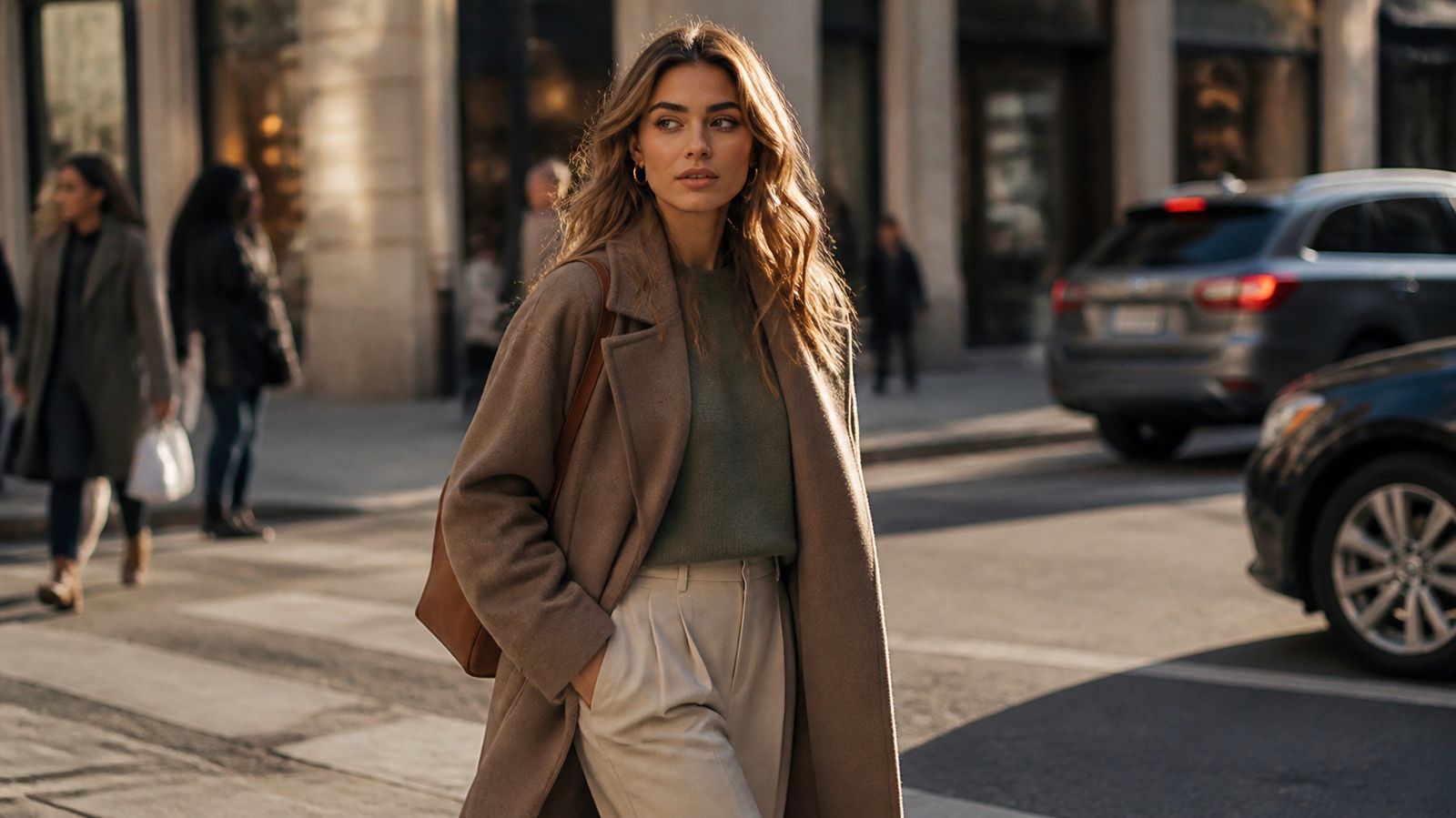
What is a Soft Autumn?
Soft Autumn is the gentlest of the three Autumn subpalettes. Like every Autumn, your undertone is warm and golden. What sets you apart is low contrast and muted color: your hair, skin and eyes sit close together in depth, and nothing about your coloring is bright or icy.
That's why clear, saturated colors tend to wear you instead of the other way around. Soft Autumn colors look like they've had a little gray or brown mixed in. Think mushroom, sage, camel and dusty coral, never neon orange or pure white.
Common Soft Autumn traits
These are patterns, not rules. Plenty of Soft Autumns break one or two of them.
- Hair: dark blonde to soft medium brown, often with golden, bronze or ash-gold tones. Silver often blends in softly rather than making a stark contrast.
- Eyes: hazel, soft green, warm gray-green or light-to-medium brown, usually without a sharp ring or high sparkle.
- Skin: warm beige, golden or peachy. It can look almost neutral, which is why many Soft Autumns are told they're Summers.
- The black test: black near your face looks heavy, and it can make shadows under your eyes more noticeable.
- The camel test: camel, oatmeal and olive look natural on you, as if you've always worn them.
The Soft Autumn palette
The six colors above are your core palette. Around them, your wider palette looks like this:
- Neutrals: mushroom, warm taupe, camel, oatmeal, cream, soft olive, cocoa brown and espresso.
- Accents: dusty coral, soft teal, sage, muted terracotta, warm rose-brown, soft salmon and moss.
- Deeper colors: rust, brick and chocolate. They work best away from your face, in a shoe, a bag or trousers.
Colors a Soft Autumn should avoid
Your colors don't need to be dull. They need to be soft. The colors that work against you are the opposite of soft:
- Stark black and optic white. Swap black for espresso, chocolate or charcoal brown, and swap white for cream or oatmeal.
- Icy and cool brights: fuchsia, royal blue, cobalt and lemon yellow.
- Neon anything, including bright orange. Your orange is a dusty coral or a soft terracotta.
- Blue-gray and cool pastels: baby pink, icy blue and lavender tend to drain warm, muted coloring.
Soft Autumn clothes: building a wardrobe that works
A closet full of nothing to wear is usually a closet full of colors that almost work. A Soft Autumn wardrobe solves that because almost everything goes with everything. Start here:
- Pick three neutrals to build around, such as camel, warm taupe and espresso. Coats, trousers and knits go here.
- Add two or three accent colors for tops and scarves, such as sage, dusty coral and soft teal.
- Choose matte, textured fabrics. Cashmere, suede, brushed cotton, linen, tweed and heathered knits suit soft coloring better than high shine.
- Keep prints blended. Look for low-contrast florals, tonal plaids and watercolor prints rather than crisp black-and-white graphics.
- Choose a medium denim wash. Faded mid-blues and warm grays work better than inky indigo or stark white.
Soft Autumn makeup
Aim for warm, blended and slightly muted. Nothing frosty, nothing that looks like a stripe of color.
- Lips: rose-brown, muted terracotta, soft brick, warm nude and peachy pink.
- Cheeks: soft peach, warm rose and apricot-brown. Cream textures blend well into soft coloring.
- Eyes: taupe, bronze, soft olive and warm brown. Brown or bronze liner rather than black.
- Brows: soft brown or taupe, a shade lighter than you think. Harsh, dark brows break up low contrast.
Jewelry, metals and hair color
Metals: brushed or antique gold, rose gold, bronze and copper. Matte finishes usually beat high polish. Tortoiseshell frames, wood, horn and cream pearls all suit the palette.
Hair color: soft golden brown, honey, bronze and blended ash-gold highlights tend to work. Very dark solid color or icy platinum adds contrast your coloring doesn't have. If you're going silver, a soft, blended transition usually suits Soft Autumns well. A colorist can tell you what works for your hair.
Soft Autumn vs. Soft Summer
This is the most common mix-up in color analysis, because both palettes are muted and low contrast. The difference is undertone: Soft Autumn leans warm and golden, while Soft Summer leans cool and rosy.
Try these side-by-side tests in daylight, with no makeup on:
- Dusty coral vs. dusty rose. If coral looks healthier, lean Soft Autumn.
- Camel vs. soft gray. If camel looks natural and gray looks flat, lean Soft Autumn.
- Brushed gold vs. silver. If gold blends into your skin and silver looks harsh, lean Soft Autumn.
Still stuck? That's normal. It's exactly what the free quiz and the photo analysis are built to sort out.
Soft Autumn after 40
Your undertone doesn't change with age. What can change is contrast: as hair silvers and skin shifts, many women find their coloring gets softer and more blended. That's often when Soft Autumn colors start looking better than ever, and when the bold rusts and blacks you wore at 30 start feeling like too much. Read more in Does your color season change with age?