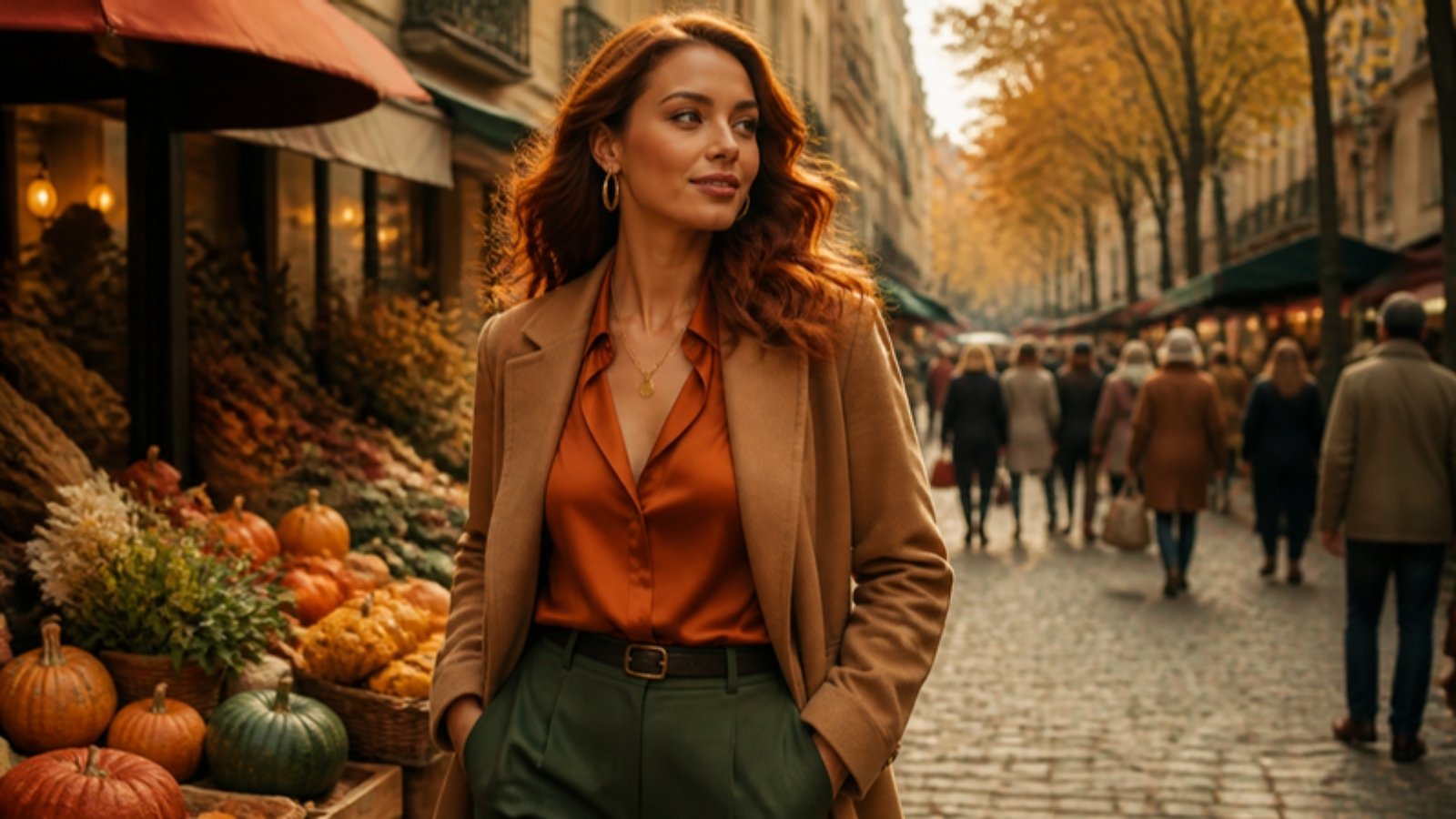
What is a True Autumn?
True Autumn is Autumn at full strength, and the warmest of the three Autumn subpalettes. Your undertone is fully warm and golden, your contrast is medium, and the colors that suit you are rich: saturated enough to have presence, earthy enough to never look neon.
It sits between two neighbors. Soft Autumn shares your warmth but is more muted and blended. Dark Autumn shares your warmth but goes deeper. True Autumn is the classic middle: terracotta, moss, rust and golden amber.
Common True Autumn traits
These are patterns, not rules. Plenty of True Autumns break one or two of them.
- Hair: auburn, copper, red, golden brown or warm chestnut. Even brown hair tends to flash red or gold in sunlight.
- Eyes: warm brown, amber, olive, warm green or hazel with gold flecks.
- Skin: golden, peachy, warm beige or bronze. Freckles are common.
- The black test: black near your face looks harsh and can make your skin look sallow.
- The rust test: rust, mustard and olive look like they were made for you, not like a trend you're trying.
The True Autumn palette
The six colors above are your core palette. Around them, your wider palette looks like this:
- Neutrals: camel, warm brown, chocolate, olive, khaki, cream and oatmeal.
- Accents: terracotta, rust, pumpkin, mustard, moss, warm teal, tomato red and golden amber.
- Deeper colors: sienna, bronze, espresso and dark olive. They anchor an outfit, in a coat, trousers, boots or a bag.
Colors a True Autumn should avoid
Your colors are warm and grounded. The ones that work against you are cool, icy or stark:
- Stark black and optic white. Swap black for chocolate, espresso or olive, and swap white for cream or ivory.
- Cool pastels: icy pink, baby blue and lavender tend to make warm skin look tired.
- Cool brights: fuchsia, magenta, royal blue and cobalt fight your golden undertone.
- Blue-gray and cool charcoal. Your gray is a warm taupe or olive-gray.
True Autumn clothes: building a wardrobe that works
A closet full of nothing to wear is usually a closet full of colors that almost work. A True Autumn wardrobe fixes that because warm colors mix easily with each other. Start here:
- Pick three neutrals to build around, such as camel, chocolate and olive. Coats, trousers and knits go here.
- Add two or three accent colors for tops and scarves, such as terracotta, mustard and moss.
- Choose rich, textured fabrics. Suede, leather, corduroy, tweed, chunky wool and raw silk all suit warm, earthy coloring.
- Lean into warm prints. Paisley, tortoiseshell, warm plaids and animal prints in brown and gold all work.
- Choose a warm denim wash. Medium washes work well, and olive or khaki trousers are an easy alternative to jeans.
True Autumn makeup
Aim for warm and glowing. Bronze and copper do more for you than pink or silver.
- Lips: terracotta, brick, cinnamon, warm red and warm nude.
- Cheeks: warm peach, terracotta and soft bronze.
- Eyes: bronze, copper, olive and warm brown. Brown or dark olive liner rather than black.
- Brows: warm brown, matched to the warmth in your hair.
Jewelry, metals and hair color
Metals: yellow gold, brass, copper and bronze. Amber, tortoiseshell, wood and warm-toned stones all suit the palette.
Hair color: copper, auburn, golden brown and warm caramel highlights tend to work. Ash tones and blue-black can look flat against golden skin. As silver comes in, it can soften your warmth, so warm colors in your clothes and makeup matter more. A colorist can tell you what works for your hair.
True Autumn vs. Soft Autumn and Dark Autumn
All three Autumns are warm. The difference is how rich and how deep your coloring is. Try these side-by-side tests in daylight, with no makeup on:
- Terracotta vs. dusty coral. If terracotta looks healthier and coral looks washed out, lean True Autumn over Soft Autumn.
- Pumpkin vs. mushroom. If pumpkin brightens you and mushroom looks dull, lean True Autumn.
- Rust vs. chocolate. If rust looks best and dark chocolate feels heavy, lean True Autumn over Dark Autumn.
Still stuck? That's normal. It's exactly what the free quiz and the photo analysis are built to sort out.
True Autumn after 40
Your undertone doesn't change with age. What can change is contrast: as hair silvers, some True Autumns find the softer, more muted end of the palette starts looking easier near the face, while the richest rusts and pumpkins move to a bag, a shoe or a coat. Your warmth stays the same. Read more in Does your color season change with age?