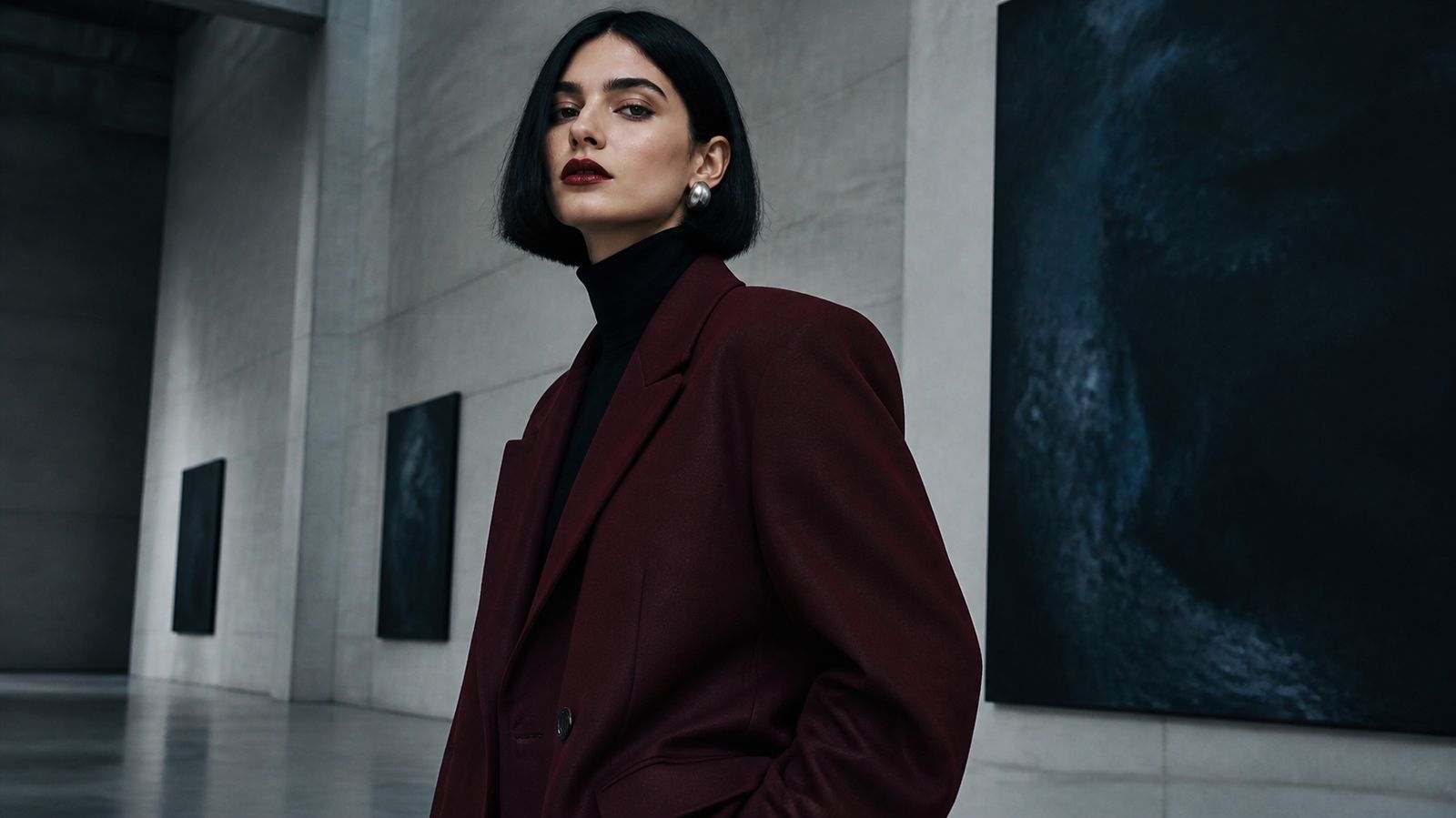
What is a Dark Winter?
Dark Winter, also called Deep Winter, is the deepest of the Winter subpalettes. Your undertone is cool, and your coloring is dark and high contrast. Think deep hair and eyes against lighter or clear skin, or deep coloring overall with a crisp, cool quality.
That depth means you can wear the most dramatic colors there are: true black, deep navy, pine and burgundy. Lighter, softer colors tend to disappear on you. Dark Winter sits next to Dark Autumn, which shares the depth but leans warm.
Common Dark Winter traits
- Hair: dark brown to black, often cool or neutral in tone. Silver can arrive as a striking salt-and-pepper.
- Eyes: dark brown, black-brown, deep hazel or deep cool green.
- Skin: anything from fair porcelain to deep brown, with a cool or neutral cast.
- The black test: black near your face looks sharp and clean, not heavy.
- The camel test: camel, mustard and orange make your skin look sallow or gray.
The Dark Winter palette
- Neutrals: black, deep navy, charcoal, dark plum-brown and crisp white.
- Accents: pine, deep burgundy, dark plum, emerald, sapphire, blue-red and deep teal.
- Brights for contrast: crisp white, icy pink and icy blue. Use them as the spark against your deep colors.
Colors a Dark Winter should avoid
- Dusty, muted shades: mushroom, sage and dusty rose. They look muddy on you.
- Warm earth tones: camel, rust, mustard and orange.
- Soft pastels on their own: peach, butter yellow and baby pink.
- Warm yellow gold right at the face, especially in a high-shine finish.
Dark Winter clothes
- Build on black and deep navy. Your tailoring, coats and trousers should be crisp and dark.
- Bring in deep jewel tones: burgundy, pine, plum and sapphire for knits, blouses and dresses. A burgundy blazer works for day or evening.
- Use contrast on purpose. A white shirt under a black or navy jacket is your signature move.
- Choose sleek fabrics: silk, satin, crisp cotton, fine-gauge knits and smooth leather. Your coloring can carry some shine.
- Pick graphic prints: high-contrast stripes, polka dots and bold geometrics in your colors.
Dark Winter makeup
- Lips: wine, deep berry, blue-red, plum and cool mauve.
- Cheeks: berry, cool rose and deep raspberry.
- Eyes: charcoal, plum, deep navy, cool taupe and black. Black liner works for you.
- Brows: cool dark brown or soft black. Avoid warm, reddish tones.
Jewelry, metals and hair color
Metals: silver, platinum, white gold and gunmetal. Polished finishes suit you. Diamonds, sapphires, rubies, onyx and black pearls are natural matches.
Hair color: cool dark browns, espresso and soft black. Warm caramel or golden highlights usually work against you. If you're going gray, a salt-and-pepper or bright silver can look striking with this palette. A colorist can tell you what works for your hair.
Dark Winter vs. Dark Autumn
Both palettes are deep. The tiebreaker is temperature. Try black against chocolate brown, and silver against gold. If black and silver look sharper on you, you're likely a Dark Winter. If chocolate and gold look healthier, read the Dark Autumn guide.
Dark Winter after 40
Your cool undertone never changes. But as hair silvers, contrast can soften, and full black and saturated jewel tones may start to look harsh. In our system, that's when some Winters read as Soft Winter, with charcoal, pewter, muted sapphire and soft burgundy near the face. If your coloring is still deep, the Dark Winter palette stays yours. See Does your color season change with age?