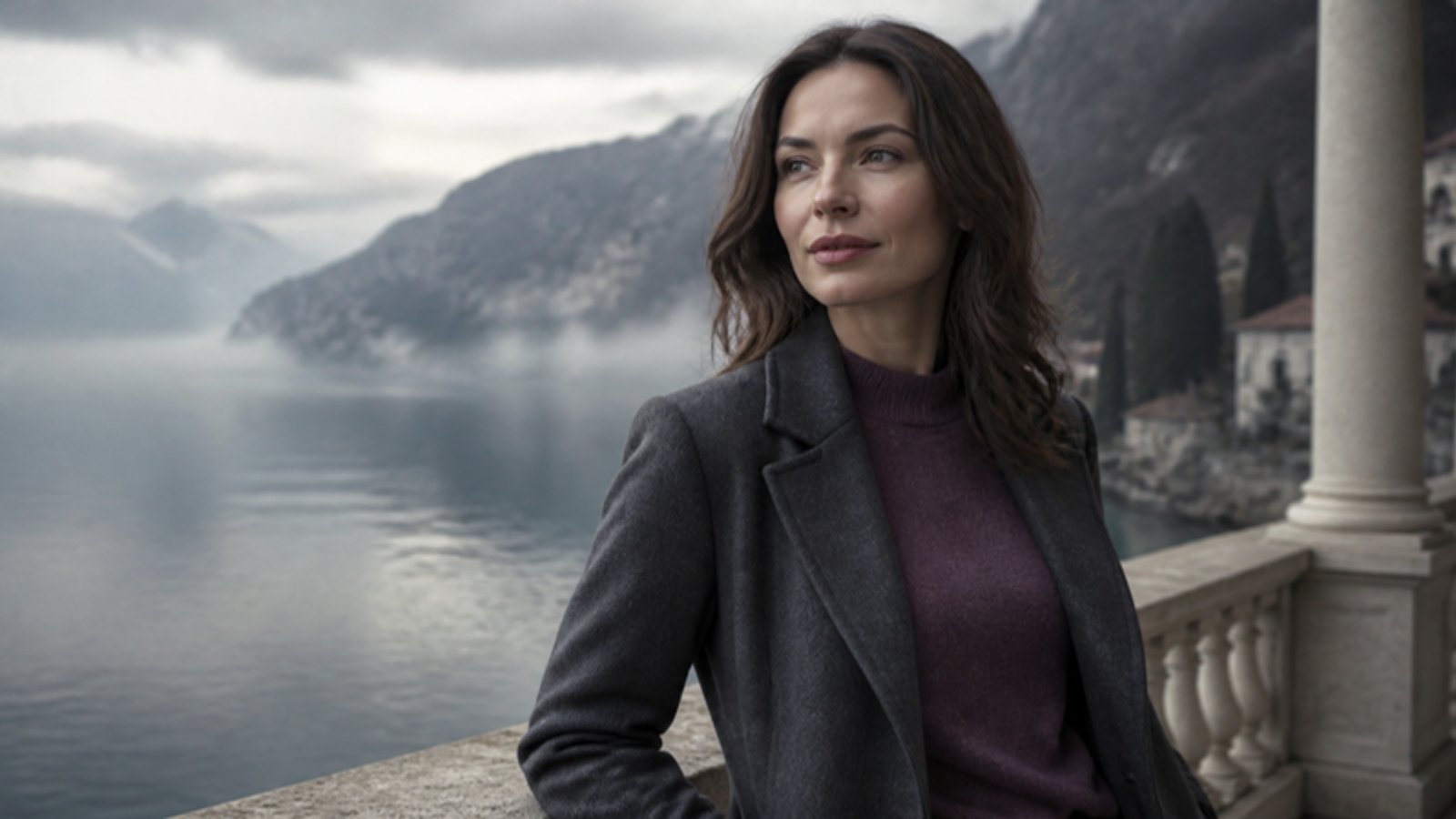
What is a Soft Winter?
Soft Winter is the gentlest of the three Winter subpalettes. Your undertone is cool and blue-based, like every Winter. What sets you apart is softened contrast and slightly grayed color: you still have a Winter's crisp, cool quality, but at a lower volume.
In our system, Soft Winter is common among Winters whose hair has silvered. The cool undertone stays the same, but true black and full-strength jewel tones can start to overpower. Pewter, muted sapphire, soft burgundy and icy lavender take their place.
Soft Winter is easy to confuse with Soft Summer, which is also cool and muted. Soft Summer is softer and rosier. Soft Winter keeps more clarity, more blue and more contrast.
Common Soft Winter traits
These are patterns, not rules. Plenty of Soft Winters break one or two of them.
- Hair: medium to dark cool brown, ash brown, or dark hair with silver coming through as salt-and-pepper.
- Eyes: cool gray, gray-blue, gray-green or soft cool brown.
- Skin: anything from fair to deep, with a cool, pink or cool-olive cast.
- The black test: true black near your face looks a little heavy. Charcoal looks better.
- The silver test: silver and pewter look natural on you, and gold looks brassy.
The Soft Winter palette
The six colors above are your core palette. Around them, your wider palette looks like this:
- Neutrals: charcoal, pewter, cool gray, soft navy, gray-taupe and soft white.
- Accents: muted sapphire, soft burgundy, cool mauve, slate teal, cool raspberry and spruce.
- Lights: icy lavender, pale cool gray and soft white. Use them to lift your darker colors.
Colors a Soft Winter should avoid
Your colors are cool and composed. The ones that work against you are warm, earthy or loud:
- Warm earth tones: camel, rust, mustard, orange and olive. They tend to make cool skin look sallow.
- Warm pastels: peach, apricot and butter yellow.
- Neon and very bright colors. They overpower softened contrast. Keep your brights for a small accessory.
- Head-to-toe true black. Charcoal, deep slate and soft navy give the same polish without the weight.
Soft Winter clothes: building a wardrobe that works
Soft Winter colors are cool and calm, so they mix easily with each other. Start here:
- Pick three neutrals to build around, such as charcoal, pewter and soft navy.
- Add two or three accent colors for tops and scarves, such as muted sapphire, soft burgundy and cool mauve.
- Choose smooth, refined fabrics. Fine merino, cashmere, wool crepe and matte silk suit you. A soft sheen is fine. Avoid gold shimmer.
- Keep prints medium contrast. Tonal stripes, cool florals and gray-on-navy patterns work better than stark black-and-white graphics.
- Choose a cool denim wash. Dark-to-medium cool indigo or gray denim works better than warm, yellowed washes.
Soft Winter makeup
Aim for cool, polished and a little softened. Definition without harshness.
- Lips: cool rose, berry, soft raspberry, mauve and muted blue-red.
- Cheeks: cool rose and soft plum.
- Eyes: gray, slate, plum and cool taupe. Charcoal or navy liner instead of black.
- Brows: cool ash brown or soft charcoal. Avoid warm, reddish brow products.
Jewelry, metals and hair color
Metals: silver, white gold, platinum, pewter and gunmetal. Gray pearls, amethyst and cool-toned stones suit the palette.
Hair color: cool ash brown and soft charcoal tend to work. Brassy, golden or copper highlights fight a cool undertone. Many Soft Winters find their natural silver looks striking, especially with charcoal and sapphire clothes. A colorist can tell you what works for your hair.
Soft Winter vs. Soft Summer
Both palettes are cool and muted, so they're easy to mix up. The difference is clarity and contrast. Try these side-by-side tests in daylight, with no makeup on:
- Navy and white vs. dusty rose. If a navy-and-soft-white stripe looks crisp on you, lean Soft Winter. If it looks harsh and dusty rose looks better, lean Soft Summer.
- Muted sapphire vs. powder blue. If sapphire wakes up your face, lean Soft Winter.
- Charcoal vs. dove gray. If charcoal looks clean and dove gray looks flat, lean Soft Winter.
Still stuck? That's normal. It's exactly what the free quiz and the photo analysis are built to sort out.
Soft Winter after 40
Your undertone doesn't change with age. What changes is contrast. For many Winters, silvering hair is exactly what moves them into Soft Winter: the cool undertone is the same, but the volume comes down. If your coloring is still very deep and high contrast, look at True Winter or Dark Winter instead. Read more in Does your color season change with age?